

BLOG
Post-Event Report: SAAFF Executive Member Breakfast
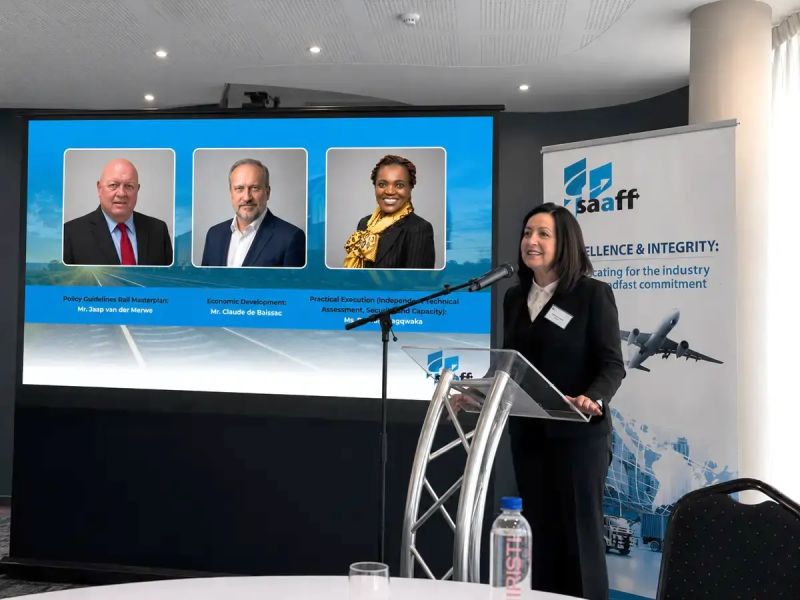
Agbiz attended the South African Association of Freight Forwarders (SAAFF) Executive Member Breakfast on Thursday, 23 July 2026, at the Radisson Hotel & Convention Centre in Kempton Park. The event brought together industry leaders, logistics experts and key stakeholders to discuss the current state and future of South Africa's freight and rail sector, with a particular focus on the Natcor Line, rail reform, infrastructure investment and improving the country's logistics performance.
The breakfast provided a valuable platform for engagement on the policy, technical and commercial interventions required to strengthen South Africa's transport network, improve trade competitiveness and support economic growth.
Jaap van der Merwe – Rail Policy and the National Rail Master Plan
Jaap van der Merwe opened the session with a comprehensive overview of South Africa's rail reform programme and the National Rail Master Plan. He explained that the Master Plan is intended to guide long-term infrastructure investment, identify network constraints and support the implementation of a more efficient, integrated rail system. He highlighted recent progress in developing third-party access to the rail network, the establishment of an independent infrastructure management function and ongoing public consultation on the National Rail Master Plan.
Van der Merwe emphasised that an efficient freight rail system is fundamental to the country's economic recovery, noting the critical role rail plays in supporting ports, exports and industrial activity. He further stressed the importance of coordinated planning between government, provinces and industry to ensure long-term investment decisions support sustainable economic growth. He also outlined plans to modernise the rail network, improve corridor efficiency and expand capacity over the coming decades.
Claude de Baissac – Economic Development and Leadership
Claude de Baissac delivered a thought-provoking presentation on South Africa's broader economic environment and the leadership required to address the country's structural challenges. Reflecting on persistent unemployment, weak economic growth and declining competitiveness, he encouraged both government and business leaders to move beyond incremental improvements and focus on meaningful, long-term transformation.
He emphasised the importance of critical thinking, innovation and purpose-driven leadership, arguing that institutions and businesses must continuously challenge existing assumptions if South Africa is to unlock sustainable economic growth. His address highlighted the need for greater collaboration across sectors and a renewed commitment to creating opportunities that deliver tangible economic and social impact.
Brenda Magqwaka – Technical Assessments and Operational Improvements
Brenda Magqwaka focused on the operational work currently underway to restore confidence in South Africa's freight rail network. She outlined the Independent Technical Assessments (ITAs) being conducted across the network to determine infrastructure conditions, maintenance requirements, safety considerations and investment priorities. These assessments are intended to provide investors and industry with reliable technical information while supporting future infrastructure planning.
She explained that while technical assessments identify infrastructure needs, commercial viability remains equally important. Magqwaka highlighted the need to better understand customer demand, service expectations and pricing to encourage a sustained shift of freight from road to rail. She also presented a phased 60-to-180-day operational improvement programme designed to improve reliability, reduce operational constraints, strengthen security, coordinate maintenance activities and build confidence among rail users.
Key Takeaways
The SAAFF Executive Member Breakfast reinforced the importance of an efficient, reliable and commercially sustainable freight rail system in supporting South Africa's economic growth and trade competitiveness. Discussions highlighted the progress being made on rail policy reform, long-term infrastructure planning and technical assessments, while acknowledging that significant work remains to restore network reliability and attract greater private sector participation.
The discussions were particularly relevant given the agricultural sector's reliance on efficient logistics and export infrastructure. The insights shared during the event underscored the importance of continued collaboration between government, industry and logistics stakeholders to improve freight movement, reduce supply chain costs and strengthen South Africa's position as a competitive trading nation.
By Temba Msiza, Agbiz
0 COMMENTS
LEAVE A COMMENT