

BLOG
We must talk about the challenges of the South African wheat industry
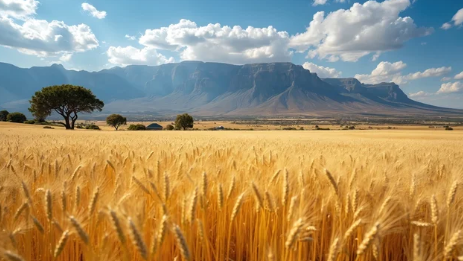
The South African wheat farming sector has faced significant challenges. The ample global supply kept wheat prices under pressure, and South African wheat prices followed a similar path.
The 2025-26 global wheat harvest is estimated at 844 million tonnes, a record harvest, according to data from the U.S. Department of Agriculture. From a consumer perspective, this is beneficial for the near term and bodes well for consumer food price inflation.
Still, lower prices and pressure on the domestic industry also mean a reduction in plantings, in an industry where we already import half of our annual wheat consumption.
The challenge at the moment, as we approach the start of the 2026-27 season, is not only the lower wheat prices but also the surge in input costs, including fertiliser and fuel, because of the Middle East war.
The industry is finding itself in a space where wheat prices are under pressure due to ample global supplies, but the start of the season is challenging due to rising input costs.
Thus, it is unsurprising that farmers intend to reduce the wheat plantings in the 2026-27 season by 6% to 486,400 hectares, according to the Crop Estimates Committee's (CEC) farmers' intentions to plant data. The provinces expected to see a notable decline in plantings are the Western Cape, Free State, and North West. The expected area plantings of 486,400 hectares would be the lowest for wheat in South Africa in 12 seasons.
It is this challenge that South African wheat farmers have generally sought to address through the effective administration of the wheat tariff that balances consumer and producer welfare. Affordable wheat is key for consumers, but sustaining the wheat industry is vital as well. Policy must work to find a balance on this issue.
We are now also seeing a change in global wheat production in the 2026-27 season. According to the WASDE Report of the U.S. Department of Agriculture, the 2026-27 global wheat harvest is estimated to fall by 24% to 819 million tonnes. This won’t be a crisis-level issue, but it will nudge up prices globally and perhaps also provide much-needed support to the local industry.
--Wandile Sihlobo is the Chief economist of the Agricultural Business Chamber of South Africa (Agbiz)
0 COMMENTS
LEAVE A COMMENT